Showing posts with label ANCIENT INDIAN HISTORY. Show all posts

Thursday, November 24, 2022

ADVENT OF ARYANS AND RIG VEDIC PERIOD

Aryans

Aryans were people who were said to speak an archaic Indo-European language and who were thought to have settled in prehistoric times in ancient Iran and the northern Indian subcontinent. 
  • Aryan is a designation originally meaning “civilized”, “noble”, or “free” without reference to any ethnicity.
  • It was first applied as a self-identifying term by a migratory group of people from Central Asia later known as Indo-Iranians (who settled on the Iranian Plateau) and, later, applied to Indo-Aryans (who travelled south to settle northern India).
  • They spoke Indo Iranian, Indo European or Sanskrit. It is said that Aryans lived in East of Alps (Eurasia), Central Asia, Arctic region, Germany, and Southern Russia. 

Migration of Aryans to India

  • There are multiple theories that talk about the original location of Aryans and where they come from and the time period of their migration into India. 
  • The migration happened over a period of time starting around 2000BCE and peaked after the decline of IVC. Later they migrated westwards, southwards and eastwards.
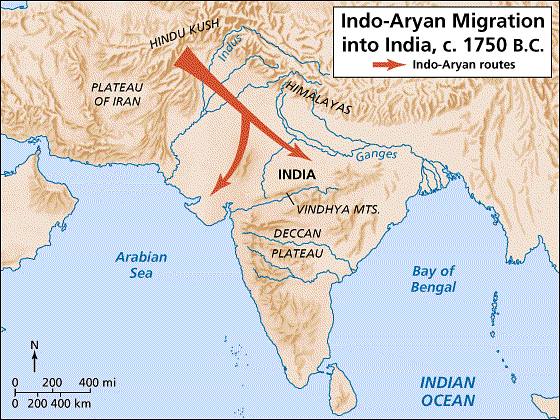
Map showing how Aryans migrated to India

  • Some say they came from the area around the Caspian Sea in Central Asia (Max Muller), while others think they originated from the Russian Steppes.
  • Bal Gangadhar Tilak was of the opinion that the Aryans came from the Arctic region.

The Vedic Age

The Vedic Age was between 1500 BC and 600 BC. In this time period the Vedas were composed in the northern Indian subcontinent. 

The Vedas

The Vedas, are the oldest texts of Hinduism. They are derived from the ancient Indo-Aryan culture of the Indian Subcontinent and began as an oral tradition that was passed down through generations before finally being written in vedic Sanskrit. 

The Four Vedas, on which the periods were named after are:
(i) The Rigveda: The oldest Veda is the Rigveda. It has 1028 hymns called ‘Suktas’ and is a collection of 10 books called ‘Mandalas.’
(ii) Samaveda: Known as the Veda of melodies and chants, Samaveda dates back to 1200-800 BCE. This Veda is related to public worship.
(iii) Yajur Veda: Yajurveda dates back to 1100-800 BCE; corresponding with Samaveda. It compiles ritual-offering mantras/chants. These chants were offered by the priest alongside a person who used to perform a ritual.
(iv) Atharva Veda: This Veda contains hymns many of which were charms and magic spells that are meant to be pronounced by the person who seeks some benefit, or more often by a sorcerer who would say it on his or her behalf.

Try yourself:After which Veda, the Early Vedic Period was named after?
  • Yajur veda
  • Sama veda
  • Atharva veda
  • Rig veda
  • The Vedic period or Vedic age is the next major civilization that occurred in ancient India after the decline of the Indus Valley Civilization by 1400 BC.
    The Vedic period can further be divided into 2 parts:
  • Early Vedic Period (1500-1000 BC)
  • The Later Vedic Period (1000-600 BC)

Early Vedic Period or The Rig Vedic Period

Since the Rigveda is considered the oldest of all the vedas, the Early vedic period i,e. 1800–1500 BCE is also called the Rigvedic period. 

Features of the Rig Vedic Period

Political Structure

  • The political units during the Rig Vedic or the early Vedic period comprised of Grama (village), Vis (clan), and Jana (people). 
  • Aryans were organized into tribes rather than kingdoms. The chief of a tribe was called a Rajan. 
  • The autonomy of the Rajan was restricted by the tribal councils called Sabha and Samiti. 
  • The two bodies were, in part, responsible for the governance of the tribe. The Rajan could not accede to the throne without their approval.


Form of Government

  • Monarchy was the normal form of Government. 
  • Kingship was hereditary. But there was a sort of hierarchy in some states, several members of the royal family exercising the power in common. 
  • There were references to a democratic form of government and their chiefs were elected by the assembled people.

The King

  • The kingdom was small in extent. The king enjoyed a position of pre-eminence in the tribe. Kingship was hereditary. 
  • He was appointed by the priest as king in the ‘Abhisheka’ Ceremony. He wore gorgeous robes and lived in a splendid palace, gaily decorated than a common building. 
  • The king had the duty to protect the life and property of his people.
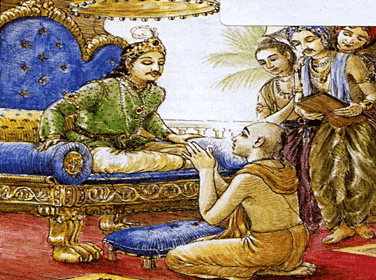
  • The sacred duty of the king was the protection of the tribes and the territory and the maintenance of priests for the performance of sacrifices. 
  • Maintenance of law and order was his principal duty. He maintained justice with the help of Purohit's. He collected tributes known as “Bali” in kind from his subjects.
Try yourself:What form of government existed during the early Vedic period?
  • Aristocracy
  • Dyarchy
  • Monarchy
  • Theocracy

Officials

  • In the work of administration, the king was assisted by a number of functionaries like the purohita (priest), the Senani (general) the Gramani (village headman). 
  • Purohit was the most important officer of the state.
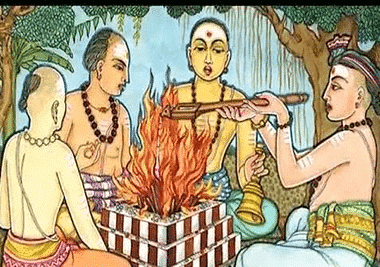
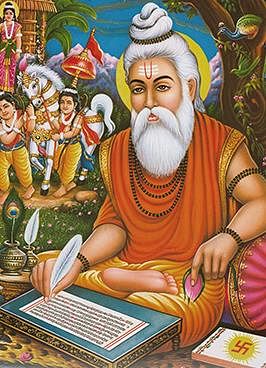
    Purohit performing rituals

The Army

  • The army was mainly consisting of Patti (infantry) and Rathi's (chariots). The weapons used by the soldiers were bows, arrows, swords, axes and spears. 
  • These weapons were made up of irons. The soldiers were organized into units known as Sardha, Vrata and gala.
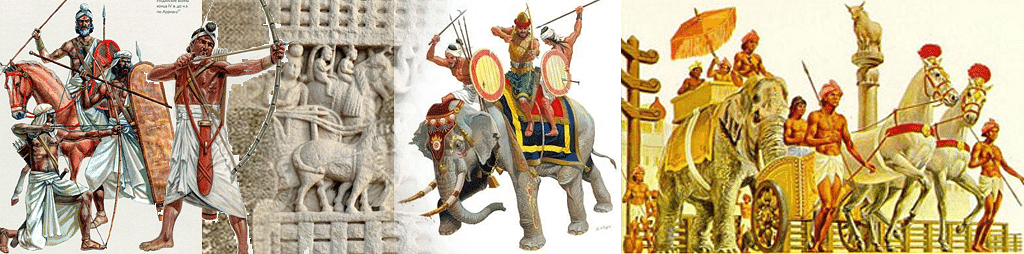
    Ancient Indian warfare

Popular Assemblies

  • The Rig Veda mentions the names of two popular assemblies known as Sabha and Samiti. 
  • Though the king enjoyed substantial power yet he was not an autocrat. In the work of administration, he consulted these two bodies and act according to their decision. Sabha was a select body of elders. 
  • The head of the sabha was known as ‘Sabhapati’.
Try yourself:Who was the most important officer of the state?
  • Purohita
  • Rajan
  • Senani
  • Gramani

Economic Structure

  • The concept of Varna, along with the rules of marriage, was made quite stiff. Social stratification took place, with the Brahmins and the Kshatriyas being considered higher than the Shudras and the Vaisyas. 
  • Cows and bulls were accorded religious significance. Aryans followed a mixed economy i.e. pastoral and agricultural in which cattle played a predominant part. 
  • The standard unit of exchange was Cow. The world's oldest currency coins were issued in ancient India during the Vedic period and were called Nishka and Mana. Nishka coins were small gold units of definite weight.
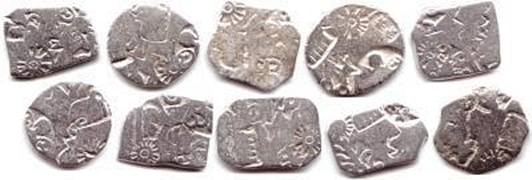
Coins of Vedic Period

Occupation

  • Apart from agriculture and animal husbandry Aryans had also other occupations. Weaving was the most important occupation. 
  • We learned about the weavers of wool and cotton together with the workers in the subsidiary industries of dying and embroidery. 
  • The carpenters built houses, chariots, wagons and supplied household utensils and furniture.

Trade and Commerce

  • There were trade and maritime activity. Sometimes traders made the journey to distant lands for larger profits in trade. 
  • There was probably commercial intercourse with Babylon and other countries in Western Asia. The principal media of trade was barter. 
  • The cow was used as a unit of value. Gradually pieces of gold called “nishka” were used as means of exchange. 
  • Trade and commerce were regulated and managed by a group of people called “Pani”.
Try yourself:Which animal was considered a symbol of wealth and prosperity?
  • Horse
  • Goat
  • Buffalo
  • Cow

Social Structure

  • The family was regarded as the social and political unit. It was the nucleus of the social life of the early Aryans. 
  • The father was the head of the family and he was known as “grihapati”. The Aryans had joint families. The father had great authority over the children.

Position of Women

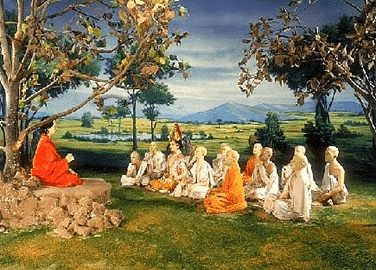
  • In the early Vedic age women enjoyed an honoured place in society. 
  • The wife was the mistress of the household and authority over the slaves. In all religious ceremonies, she participated with her husband.
  •  The Prada system was not prevalent in society. Sati system was also not prevalent during this period
  • The Rig-Veda mentions the names of some learned ladies like Viswavara, Apala and Ghosa who composed mantras and attained the rank of Rishis. The girls were married after attaining puberty. 
  • The practice of ‘Swayamvara’ was also prevalent in society. Monogamy was the general practice. Remarriage of widows was permitted.

Education

  • In the Rig-Vedic age great importance was given to education
  • There were Gurukuls which imparted education to the disciples after their sacred-thread ceremony
  • Entire instruction was given orally. The Vedic education aimed at proper development of mind and body
  • The disciples were taught about ethics, the art of warfare, the art of metal and the concept of Brahma and philosophy, and basic sciences like agriculture, animal husbandry, and handicrafts.
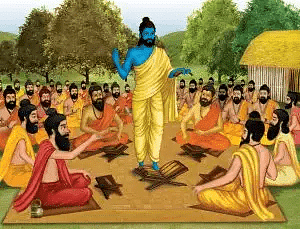
Gurukul

Caste System

  • In the early Vedic age there was no caste system. Members of the same family took to different arts, crafts, and trades. 
  • People could change their occupation according to their needs or talents. There was hardly any restriction in intermarriage, change of occupation. 
  • There was no restriction on taking food cooked by the Sudras.

Agriculture

  • Reference in Rig-Veda shows that agriculture was the principal occupation of the people. 
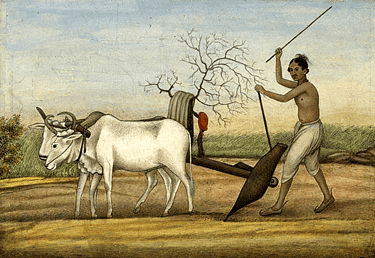
  • They ploughed the field by means of a pair of oxen. Rig-Veda even mentions that 24 oxen were attached to a ploughshare at the same time to plough the land. 
  • The ploughed land was known as Urvara or Kshetra. Water was supplied into the fields by means of an irrigation canal. 
  • The use of manure was known to them.
    Farming
  • Barley and wheat were mainly cultivated. Cotton and oilseeds were also grown. Rice was perhaps not extensively cultivated. Agriculture was their main source of income.

Domestication of Animals

  • Besides agriculture, cattle breeding was another means of living. There are prayers in the Vedas for Gosu (cattle). 
  • Cows were held in great respect. Cows were symbols of the wealth and prosperity of the Aryans. Sometimes cows were the medium of exchange. 
  • The Aryans had also domesticated animals like horse, ox, dog, goat, sheep, buffalo and donkey.
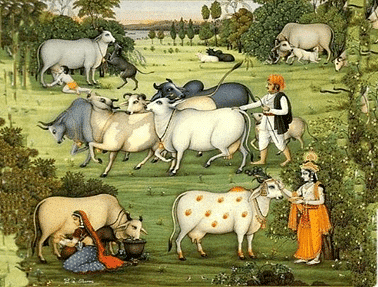
Cattle Rearing

Transport and Communication

  • The chief means of transport by land were rath (Chariots) and wagons drawn by horses and oxen. 
  • Riding on horseback was also in vogue.

Religion

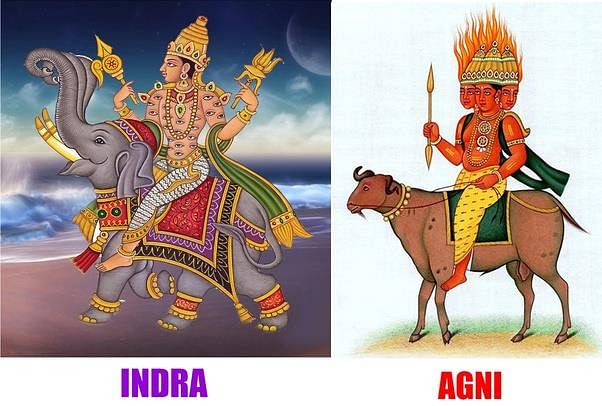
  • Rishis, composers of the hymns of the Rig Veda, were considered to be divine. The main deities were Indra, Agni (the sacrificial fire), and Soma.
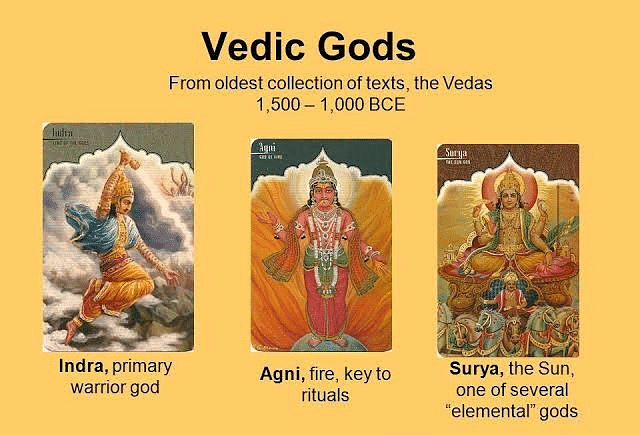
    Gods mentioned in Rig Veda
  • People also worshipped Mitra-Varuna, Surya (Sun), Vayu (wind), Usha (dawn), Prithvi (Earth) and Aditi (the mother of gods). Yoga and Vedanta became the basic elements of religion.

The Emergence of Mahajanapadas (600-321 BC)

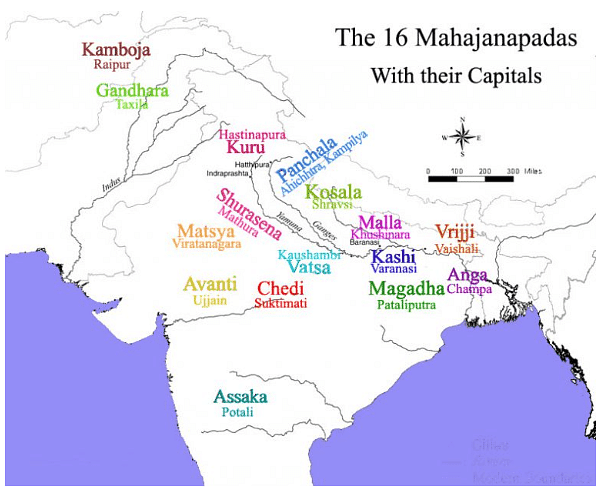
  • In the later Vedic period, the tribal organisations changed their identity and gradually shifted to the territorial identity, and the area of settlement was now regarded as janapadas or states. 
  • In the transition from tribal to monarchy, they lost the essential democratic pattern of the tribe but retained the idea of government through an assembly representing the tribes. 
Mahajanapadas

  • These states consisted of either a single tribe such as Shakyas, Kolias, Malas etc.
  • The people in the lower Ganges Valley and Delta, which were outside the Aryan pale, were not incorporated. 
  • There was, therefore, a strong consciousness of the pure land of the Aryans called Aryavarta. 
  • Each janapada tried to dominate and subjugate other janapadas to become Mahajanapadas.


 Important Republics

  • The kings in these states had supreme authority. 
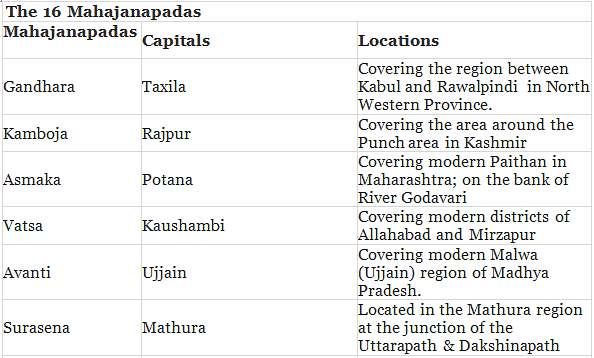
  • The Mahajanpadas of Vriji, Malla, Kuru, Panchal and Kamboj were republican states and so were other smaller states like Lichhavi, Shakya, Koliya, Bhagga, and Moriya.
  • These republican states had a Gana-parishad or an Assembly of senior and responsible citizens. 
  • This Gana-Parishad had the supreme authority in the state. All the administrative decisions were taken by this Parishad. 

Again, the republics were basically of two types: 

  1. The republics comprising a single tribe like those of the Sakyas, the Kolias and the Mallas, and 
  2. The republics comprising a number of tribes or the republics of confederacy like the Vrijjis. 
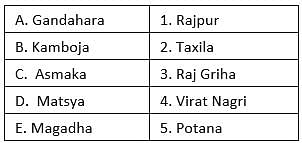
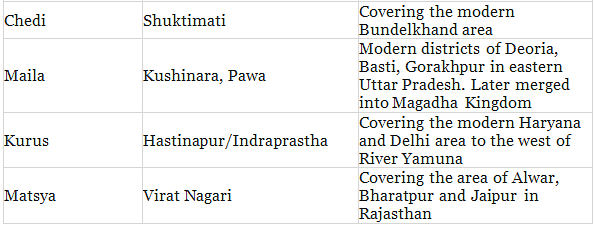
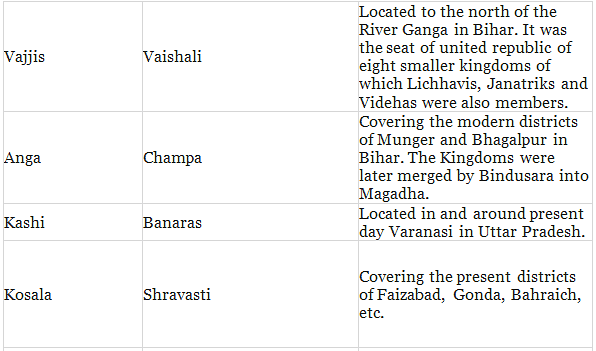
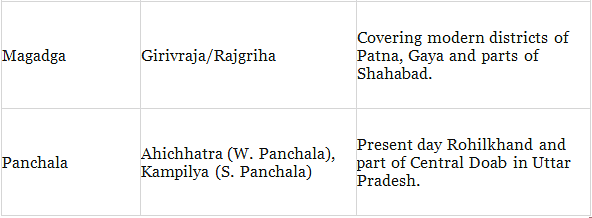
Try yourself:Match the following Mahajanapadas with their capitals
  • A - 2, B - 1, C - 5, D - 4, E - 3
  • A - 5, B- 3, C- 4, D - 1, E- 2

Difference between Republics and Monarchies 

  • In republics, every tribal oligarch claimed share in revenues from peasants. In the monarchies, the king claimed to be the sole recipient of such revenues.
  • In the tribal oligarchy or republic, each raja (tribal oligarch) was free to maintain his own little army under his Senapati. In a monarchy, the king maintained his regular standing army. He did not permit any other armed forces within his boundaries.
  • Republics functioned under the leadership of the oligarchic assemblies, while a monarchy functioned under the individual leadership of the king.
  • The Brahmanas had a considerable influence on the monarchial administration, while they were relegated to the background in the republics.

Wednesday, November 23, 2022

ADVENT OF ARYANS AND RIG VEDIC PERIOD

Original Home and Identity

  • It is difficult to say that all the earliest Aryans belonged to one race, but their culture was more or less of the same type. They were distinguished by their common language.People in Rigveda Period: Aryans
  • They spoke the Indo-European languages, which are current in changed forms all over Europe, Iran and the greater part of the Indian subcontinent. Originally the Aryans seem to have lived somewhere in the steppes stretching from southern Russia to Central Asia. 
  • Their earliest life seems to have been mainly postoral, agriculture being a secondary occupation. Although the Aryans used several animals, the horse played the most significant role in their life. Its swiftness enabled them and some allied people to make successful inroads on West. Asia from about 2000 B.C. onwards.
  • On their way to India to Aryans first appeared in Central Asia and Iran, where the Indo-Iranians lived for a long time. We know about the Aryans in India from the Rig Veda. The term Arya occurs 36 times in this text, and generally indicates a cultural community.
  • The Rig Veda is the earliest text of the Indo European languages. It is a collection of prayers offered to AgniIndraMitraVarun and other gods by various families of poets or sages. It consists of ten mandalas or books, of which Books II to VII forms its earliest portions. Books I and X seem to have been the latest additions.
  • The Rig Veda has many things in common with the Avesta, which is the oldest text in the Iranian language. The two texts use the same names for several gods and even for social classes. But the earliest specimen of the Indo-European language is found in an inscription of about 2200 B.C. from Iraq Later such specimens occur in Hittite inscriptions in Anatolia (Turkey) from the nineteenth to the seventeenth centuries B.C.
  • Aryan names appear in Kassite inscriptions of about 1600 B.C. from Iraq and in Mitanni inscriptions of the fourteenth century B.C. from the Aryans appeared in India.

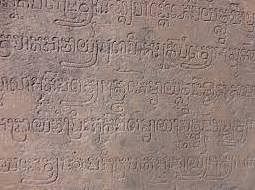
Mitanni Inscription

  • The earliest Aryans lived in the geographical area covered by eastern Afghanistan, North-West Frontier Province, Punjab and fringes of western Uttar Pradesh. Some rivers of Afghanistan such as the river Kubha, and the river Indus and its five branches, are mentioned in the Rig Veda. The Sindhu, identical with the Indus, is the river par excellence of the Aryans, and it is repeatedly mentioned.
  • Another river, the Saraswati, is called Naditama or the best of the rivers in the Rig Veda. The whole region in which the Aryans first settled in the Indian subcontinent is called the Land of the Seven Rivers.

Tribal Conflicts 

  • We hear of many defeats inflicted by Indra on the enemies of the Aryans. In the Rig Veda Indra is called Purandara which means that he was the breaker of forts. 
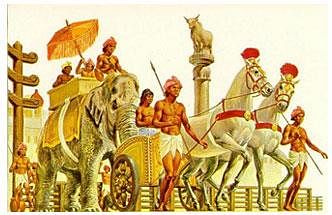
  • The Aryans succeeded everywhere because they possessed chariots driven by horses, and introduced them for the first time into West Asia and India. The Aryan soldiers were probably equipped also with coats of mail (vaiman) and better arms.

Aryans with Chariot

  • According to tradition, the Aryans were divided into five tribes panchajana but there might have been other tribes also. The Bharatas and the Tritsu were the ruling Aryan clans, and they were supported by priest Vasisththa.
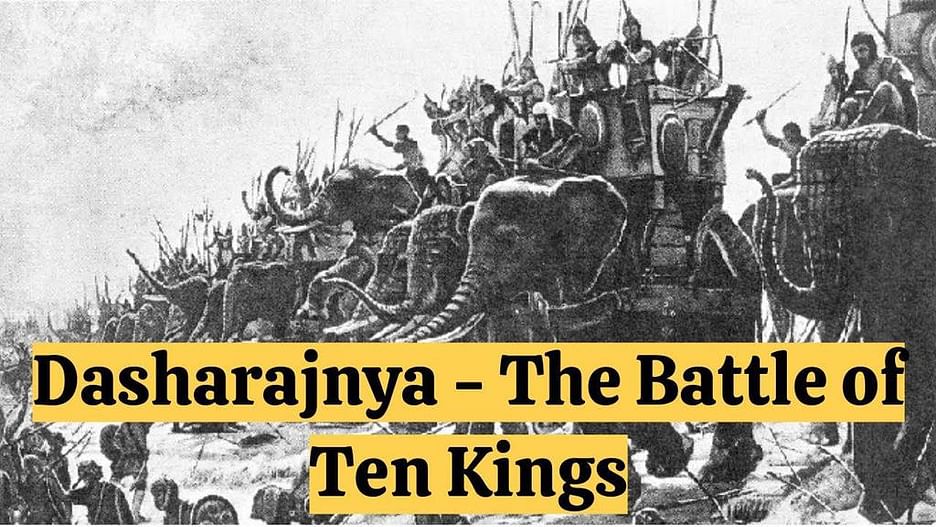
  • The country Bharatavarsha was eventually named after the tribe Bharata, which appears first in the Rig Veda. The Bharata ruling clan was opposed by a host of ten chiefs, five of whom were heads of aryan tribes and the remaining five of non-aryan people. The battle that was fought between the Bharatas on the one hand and the host of ten chiefs on the other is known as the Battle of Ten Kings
  • This battle was fought on the river Parushni, identical with the river Ravi and it gave victory to Sudas and established the supremacy of the Bharatas. Of the defeated tribes, the most important was that of the Purus. Subsequently, the Bharatas joined hands with the Purus and formed a new ruling tribe called the Kurus. The Kurus combined with the Panchalas, and they together established their rule in the upper Gangetic basin where they played an important part in later Vedic times.

Material Life 

  • The Rig Vedic people possessed better knowledge of agriculture. Ploughshare is mentioned in the earliest part of the Rig Veda though some consider it an interpolation. Possibly this ploughshare was made of wood. They were acquainted with sowing, harvesting and threshing, and knew about the different seasons.
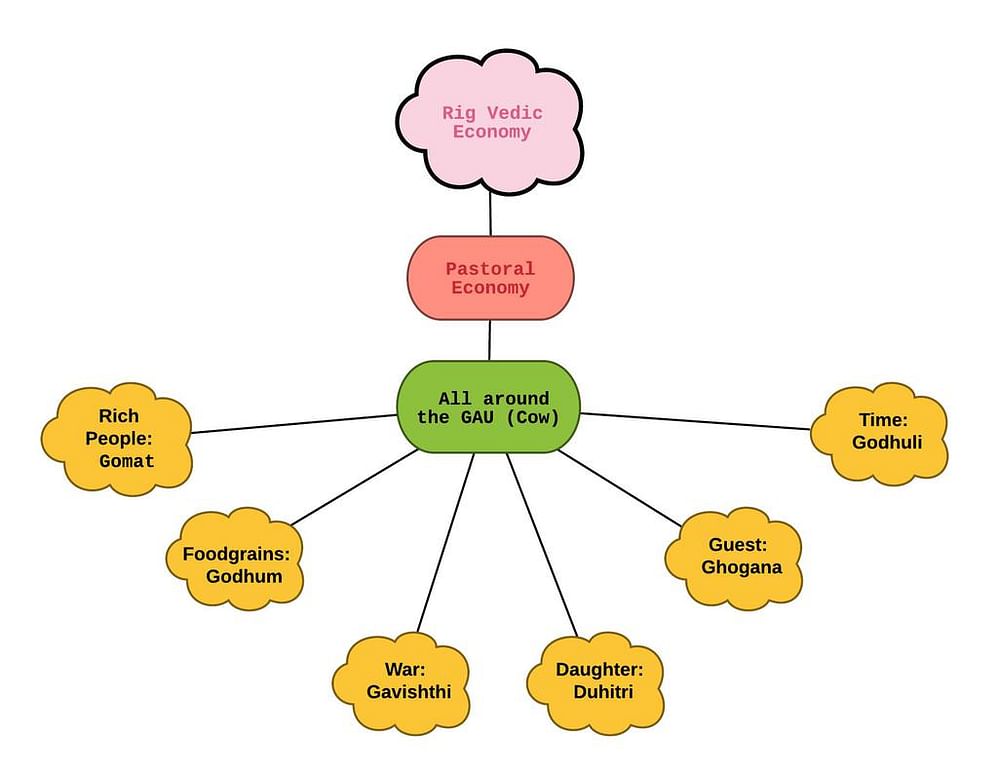
  • In spite of all this, there are so many references to the cow and the bull in the Rig Veda that the Rig Vedic Aryans can be called predominantly a pastoral people. Most of their wars were fought for the sake of cows. The terms for war in the Rig Veda is gavishthi or search for cows. The cow seems to have been the most important form of wealth. The Rig Veda, mentions such artisans as the carpenter, the chariot-maker, the weaver, the leather worker, the potter, etc.

Terms used by rigvedic aryans

  • This indicates that they practised all these crafts. The term ayas used for copper or bronze show that metal-working was known. But we have no clear evidence of the existence of regular trade. The Aryans or the Vedic people were acquainted more with land routes because the word samudra mentioned in the Rig Veda mainly denotes a collection of water. We may, therefore, this of a pre iron phase of the PGW which coincided with the Rig Vedic phase.

Tribal Polity

  • The administrative machinery of the Aryans in the Rig period worked with the tribal chief in the centre, because of his successful leadership in war. He was called Rajan.
  • It seems that in the Rig Vedic period the king’s post had become hereditary. We have traces of election of the king by the tribal assembly called the Samiti. The king was called the protector of his tribe.
  • Several tribal or the clan-based assemblies such as the sabhasamitividathagana is mentioned in the Rig Veda. They exercised deliberative, military and religious functions. Even women attended the sabha and vidatha in Rig Vedic times. But the two most important assemblies were the Sabha and the Samiti. These two were so important that the chiefs or the kings showed eagerness to win their-support.
  • In the day-to-day administration, the king was assisted by a few functionaries. The most important functionary seems to have been the purohitaSage Vasishtha
  • The two priests who played a major part in the time of Rig Veda are Vashishta and Vishwamitra. Vishwamitra composed the gayatri mantra to widen the Aryan world. The next important functionary seems to be the senani, who used spears, axes, swords, etc. We do not come across any officer concerned with the collection of taxes.
  • Probably the chiefs received from the people voluntary offerings called Bali. Presents and spoils of war were perhaps distributed in some Vedic assemblies. The Rig Veda does not mention any officer for administering justice. Spies were employed to keep an eye on such unsocial activities.
  • The officer who enjoyed authority over a large land or pasture ground is called Vrajapati. He led heads of the families called kulapas, or the heads of the fighting hordes called graminis to battle. 
  • In the beginning, the gramani was just the head of a small tribal fighting unit. But when the unit settled, the gramani became the head of the village, and in course of time he became identical with the Vrajapati. The king did not maintain any regular or standing army, but in times of war he mustered a militia whose military functions were performed by different tribal groups called vrataganagramasardha. By and large it was a tribal system of government in which the military element was strong.
Try yourself:With reference to the administrative machinery of the Aryans in the Rig period, the term Samiti means?
  • Tribal clan
  • Tribal assembly
  • Tribal leader
  • Tribal army

Tribe and Family 

  • Kinship was the basis of social structure, and a man was identified by the clan to which he belonged. People gave their primary loyalty to the tribe, which was called jana. The term jana occurs at about 275 places in the Rig Veda, and the term janapada or territory is not used even once. The people were attached to the tribe, since the territory or the kingdom, was not yet established.
  • Another important term which stands for the tribe in the Rig Veda is vis, it is mentioned 170 times in that text. Probably the vis was divided into grama or smaller tribal units meant for fighting. When the gramas clashed with one another it caused samgrama. The most numerous varna of vaishya arose out of the vis or the mass of the tribal people.
  • The term for family (kula) is mentioned rarely in the Rig Veda. It comprised not only mother, father, sons, slaves, etc., but many more people also. It seems that family in early Vedic phase was indicated by the term griha, which frequently occurs in this text. In the earliest Indo-European languages one word is used for nephew, grandson, cousin, etc. It seems that several generations of the family lived under the same roof. Because it was a patriarchal society, the birth of a son was desired again and again, and especially people prayed to the gods for brave sons to fight the wars. 
  • In the Rig Veda, no desire is expressed for daughters, though the desire for children and cattle is a recurrent theme in the hymns. Women could attend assemblies. They could offer sacrifices along with their husbands. We have an instance of five women who composed hymns although the later texts mention 20 such women.
  • We also notice the practice of levirate and widow remarriage in the Rig Veda. There are no examples of child-marriage, and the marriageable age in the Rig Veda seems to have been 16 to 17.

Social Divisions 

  • The Rig Veda mentions Arya varna and Dasa varna. The tribal chiefs and the priests acquired a larger share of the booty, and they naturally grew at the cost of their kinsmen, which created social inequalities in the tribe. Gradually the tribal society was divided into three groups - warriorspriests and the people - on the same pattern as in Iran. The fourth division called the Shudras appeared towards the end of the Rig Vedic period, because it is mentioned for the first time in the tenth Book of the Rig Veda, which is the latest addition.
  • In the age of the Rig Veda differentiation based on occupations had started. But this division was not very sharp. We hear of a family in which a member says: “I am a poet, my father is a physician, and my mother is a grinder. Earning livelihood through different means we live together”. We hear of gifts of cattle, chariots, horses, slaves, tec.
  • Unequal distribution of the spoils of war created social inequalities, and this helped the rise of princes and priests at the cost of the common tribal people. But since the economy was mainly pastoral and not food-producing, the scope for collecting regular tributes from the people was very limited. We do not find gifts of land and even those of cereals are rare. We find domestic slaves but not the wage-earners.
  • Tribal elements in society were stronger and social divisions based on the collection of taxes or accumulation of landed property were absent. The society was still tribal and largely egalitarian.
Rig Vedic Gods
  • The most important divinity in the Rig Veda is Indra, who is called Purandara or breaker of forts. Indra played the role of a warlord, leading the Aryan soldiers to victory against the demons. Two hundred and fifty hymns are devoted to him. He is considered to be the rain god and thought to be responsible for causing rainfall.
  • The second position is held by Agni (fire god) to whom 200 hymns are devoted. Fire played a significant part in the life of primitive people because of its use in burning forests, cooking, etc. The cult of fire occupied a central place not only in India but also in Iran, In Vedic times Agni acted as a king of intermediary between the gods on the one hand, and the people on the other. 
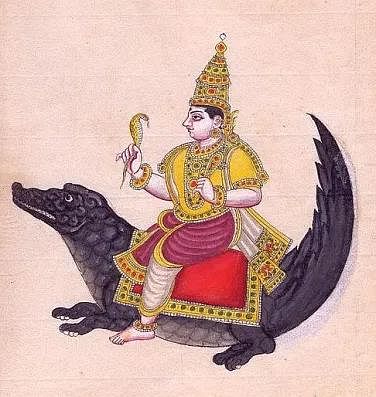
  • The third important position is occupied by Varuna who personified water. Varuna was supposed to uphold the natural order, and whatever happened in the world was thought to be the reflection of his desires.
    Varuna
  • Soma was considered to be the god of plants and intoxicating drink is named after him. The Maruts personify the storm. This we have a large number of gods., who represent the different forces of nature in one form or another but are also assigned human activities. We also find some female divinities such as Aditi and Ushas who represented the appearance of the dawn. But they were not prominent in the time of the Rig Veda in the set-up of the period the male gods were far more important than the female.
  • The dominant mode of worshipping the dos was through the recitation of prayers and offering of sacrifices. Prayers played an important part in Rig Vedic times. Both collective and individual prayers were made.
  • Originally every tribe or clan was the votary of a special god. It seems that prayers were offered to gods in chorus by the members of a whole tribe. This also happened in the case of sacrifices. Agni and Indra were invited to partake of sacrifices made by the whole tribe (Jana). Offerings of vegetables, grain, etc. were made to gods. 
  • But in Rig Vedic times the process was not accompanied by any ritual or sacrificial formulae. They asked mainly for Praja (children), Pashu (cattle), food, wealth, health, etc.
Try yourself:Who is the most important divinity Rig Vedic period?
  • Agni
  • Soma
  • Aśvins
  • Indra