- In previous chapters on the prehistoric period, you have seen that in different regions of India communities of different stages of cultural development were present during Ca. 2000-1000 B.C.
- Their cultures were agro-pastoral and our understanding of these cultures is based entirely on archaeological remains because, with the exception of Harappa culture, none of these has left behind any written records.
- However, we had before on the evidence provided by a voluminous body of religious texts which are considered by the literary records of India. We shall also try to supplement this evidence with, wherever relevant, archaeological evidence.
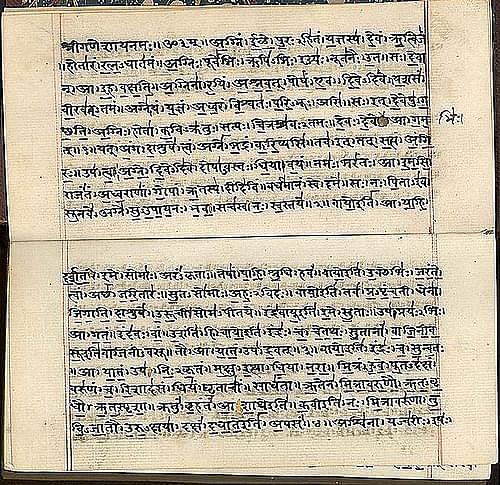 The Vedas are the earliest manuscripts
The Rig Veda is considered to be the earliest of hymns available, and so, we shall start by examining the Rigveda for an understanding of the Early Vedic period and then go on to other Vedas and allied texts which are placed later. This exercise is necessary for two reasons.
- First, the Vedas are thought to have been composed by the Aryans and it was long believed that the Aryans played a major role in civilising the Indian subcontinent. The contents of the Rigveda, if they are analysed carefully, do not give the impression of very advanced material culture. On the other hand, many of the material traits, which are characteristic of Indian civilization, are already present in the non-Vedic archaeological cultures in different parts of India.
- Second, when the contents of the Rigveda are compared with the contents of Later Vedas and allied texts, it becomes clear that significant changes took place in the Vedic society itself.
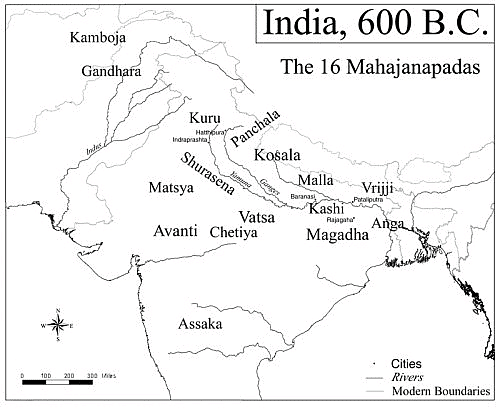 The 16 Mahajanapadas
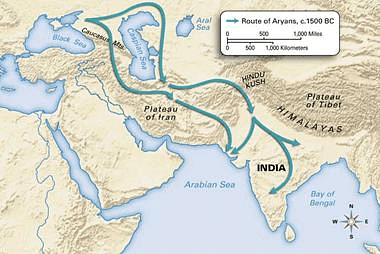
- This means that there was no linked cultural pattern which can be called Vedic culture or Aryan culture. The core geographical area to which the evidence of the Rigveda could relate was Sapta-Sindhu or the land of seven rivers. This would correspond to the whole of Punjab and its neighbouring region Haryana, but Rigvedic geography also included the Gomal plains, southern Afghanistan and southern Jammu and Kashmir. Indo-Aryan migration from West Asia into the Indian subcontinent.
- These migrants who are regarded as the authors of the 'Vedas' are called the Vedic people. According to this historical interpretation, the Aryans came to India in several stages or waves. The Aryans are considered to represent a linguistic group speaking Indo-European languages. They are distinguished by traditional historians and archaeologists from the non-Aryan Harappans of the preceding period.
- However, in making certain observations on Early Vedic society it may be fruitful to see if literary texts and archaeological evidence can supplement each other. If both types of sources are of the same region and of the same period, then they together can give us more detected ideas on economic, social, political and religious life.
Let us see to what extent archaeological evidence help us in answering this question. Archaeologists have attempted to relate the various post-Harappan cultures with the Aryans.
- The Painted Grey Ware Pottery which has been dated between 900 B.C. to approximately 500 B.C., has been repeatedly connected with Aryan craftsmanship. Their argument is based on inferences that historians make from their analysis of the literary texts.
- Hence, archaeologists, following linguistic similarities found between the Rigveda and the Avesta, tried to find similarities in pottery forms, paintings on ceramics and forms of copper objects etc. between post-Harappan and the West Asian/Iranian Chalcolithic assemblages. Such similarities were magnified to support the view that the Aryans were a group of people who migrated from West Asia to the Indian subcontinent.
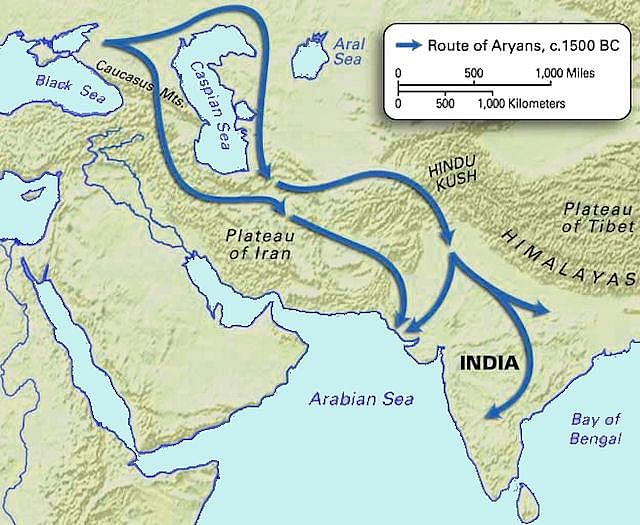 The Route of Aryans
Thus literary and archaeological sources were made to support one another in order to validate the notion of migration. Linguistic similarities between the Rigveda and the Avesta are not disputed. But such similarities do not really suggest large-scale migration of people into the Indian subcontinent.
Also, the similarities which have been found between chalcolithic artefacts of India and those of Western Asia are only occasional. They also do not suggest large-scale migration of people. The concept of an "Aryan", as stated before, cannot be equated with any particular type of pottery. It also does not have any ethnic or racial significance. The 'Aryan' is, therefore, at best a vague concept, related to linguistic similarities between people.

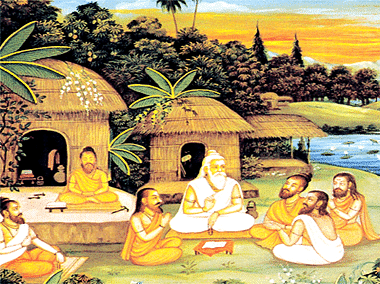
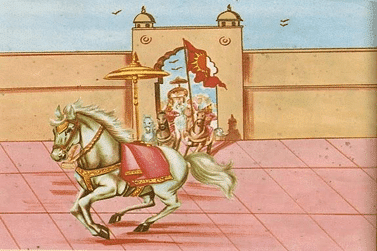
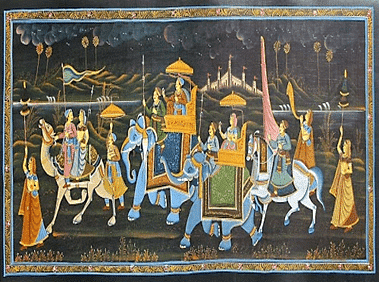
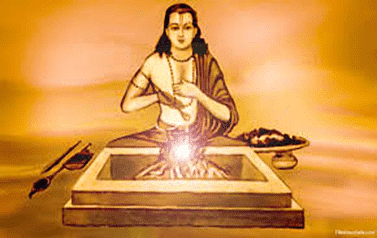
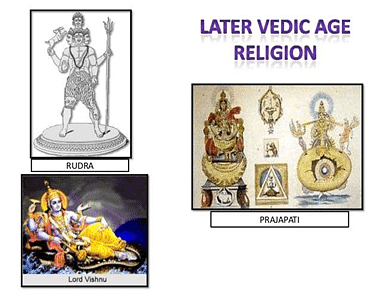 (ii) Rituals and Sacrifices: During this period the rites and ceremonies of Vedic religion were elaborated and become complex. In the Rig Vedic age Yajnas were a simple affair which every householder could do. But in the later Vedic age sacrifice became an important thing in worship. Now the priestly class devoted their energy to find out the hidden and mystic meaning of the rites and ceremonies.
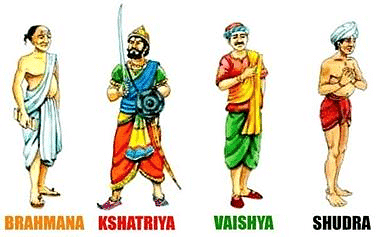
 Later Vedic period is marked by lineages of clans, and small kingdoms developed in many parts of the Ganga valley, leading to the development of the state after 600 BCE. The idea of janapada and rashtra as territorial units had developed. The raja wielded much power and the social divisions began to strike deep roots. The varna system had developed well and Sudra identity became more marked during this period.