Showing posts with label UPSC preparation. Show all posts

Thursday, March 30, 2023

LITERATURE: THE VEDIC PERIOD

Literature

  • Veda means knowledge, comes from the root vid (to know). They are given the titles of Apaurusheja (not made by man) and Nitya (eternal).
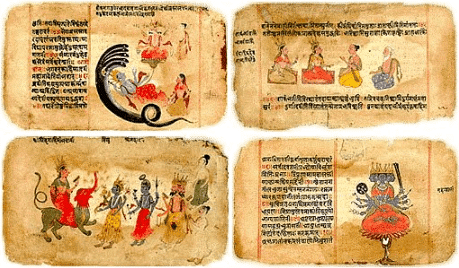
    Literature - Vedic Period
  • The Veda consists of four different classes of literary composition, namely Mantras, Brahmanas, Aranyakas and Upnishads.
  • Mantras: (saying, song, formula) consists of the oldest division of Vedic literature and is distributed in four samhitas (or collection); Rig Veda Samhita, Sam Veda Samhita Yajur Veda, Samhita and Athrva Veda Samhita. The first three are known  as Trayi (three fold knowledge).
  • Samhita of Rig Veda is a collection of lyrics in praise of different gods. These were recited by the priest styled Hotri. It contains 1028 hymns, divided into 10 mandalas and some times into 8 astakas. But the former division is more popular. II-VII mandalas are the earliest and are also called family books. They are attributed to Gritsamada, Visvamitra, Vasudev, Attri, Bhardwaj and Vashistha. Mandala VIII is attributed to Kanva and Angiras. Mandala IX is attributed to Soma.
  • It gives us an insight into the political, social, economic and religious life of the people of Rig Vedic India.
  • Samhita of Sam Veda - (books of chants) - All of its verses except 75 being taken directly from Rig-veda. These verses are given tune for the purpose of singing. Its songs were meant to be sung at some sacrifice by a special class of priests called Udgatri. It shows that Aryans loved music and were not marely puritans.
  • Samhita of Yajur Veda (book of sacrificial prayers) - It deals with the procedure for the performance of sacrifices. It contains rituals as well as hymns. Recited by Advaryu.
  • It can be divided into two parts:
  • (a) Shyama Yajur Veda (Black Yajur Veda) - It is older and contains commentary in prose in addition to the text.
  • (b) Sukla Yajur Veda (White Yajur Veda). It contains instructions only.
  • Samhita of Athrva Veda (book of magical formula) also known as non-Aryan work some of its hymns are as old as the earliest hymns of Rig-veda. From the historical and scientific point of view resembles the Rig Veda, however its spirit is different. It is divided into 20 books.


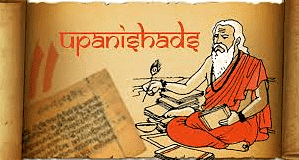
Upanishads

It is a collection of songs, spells and incantations for the cure of disease, the restoration of harmony and the exorcism of evil spirit etc.
  • The Aitareya and Kaushitaki Upanishads belong to Rig Veda.
  • Chandogya and Kena Upanishad belong to Sama Veda 
  • Taittiriya, Katha and Svetasvata belong to the Krishna Yajur Veda.
  • Brihadaanyaka and Isa belong to the skla Yajur Veda
  • Prasna, Mundaka and Mundukya belong to the Atharva Veda.

(2) Brahmanas—They marked the transition from the Vedic to later Brahmanical social order.

  • They explain meaning of sacrifices and also the methods of performing them.
  • They are commentries on various hymns of the Vedas to which they are appended.
  • Each Brahmana is connected with one of the Samhitas.
  • The three Brahmanas contain a lot of information about the non-Aryans and also tell us the methods by which the non-Aryans were to be admitted into the Aryan fold.
  • To Rig Veda - Aitareya Brahmana and Kaushtaki Brahmana.
  • To Sama Veda - Tandya-maha Brahmana, Sadvinsa Brahmana, Jaiminiya Brahmana.
  • To Yajur Veda - Satapatha Brahmana; most exhaustive and most impotant of all the Brahmanas; points out the progress of culture from Panchala to Videha.
  • To Atharva Veda - Gopatha Brahmana
  • The difference between the Brahmanas connected with the various Vedas lies in the fact that the Brahmanas of the respective Vedas     deals with the work of different priests.
  • As regards their fundamentals all the Brahmanas agree with one another to a very great extent.
  • Aranyakas  (forest book) -These are the books of instructions to be given in the forest meant for wood dwelling hermits.
  • They are found as appendices to the Brahmanas.
  • It marks the transition from ritualistic to philosophical thought.
  • Upanishads  (secret or esoteric doctrine) - Its name is derived from UPANISAD i.e “to sit near some one”. - There are 108 Upnishads altogether. - They contain deep speculations of a philosophical character which revolve around the two concepts of Brahma and Atma.

Comparison between Dravidian and Aryan Culture

  • The Dravidians did not initiate and practise a  social theory like Aryan theory of varnashrama—Brahmanas, Kshtriyas, Vaishyas and Shudras.
  • The caste-system, the very framework of the Aryan society, was conspicuous by its absence in the Dravidian society.
  • The Dravidian laws of matrimonial alliances differed fundamentally from those of the Aryans. The Dravidians could marry within the fold of their blood relations, while the Aryans were denied this privilege.
  • The social system of Dravidians, being matriarchal, was quite in contradiction to the patriarchal system of the Aryans.
  • Their mode of life, customs, manners, religion and languages differed from those of the Aryans.

Differences between the Indus Valley Civilization and the Vedic Culture 

  • Harappan civilization was superior to that of the Vedic culture.
  • Indus Valley Civilization was an urban civilization whereas the Aryan culture was pastoral.
  • The Indus valley people made use of only copper and bronze and iron was not known to them.
  • There was brisk trade (inland and foreign) during the Harappan period.
  • Humped-bull was probably a sacred animal to the Indus valley people whereas cow occupied a sacred place among the Aryans.
  • The Indus valley people worshipped mother gooddesses.
  • The Indus valley society was theocratic in nature. But the Aryan society was secular.
  • The Indus valley people, although they are not artistic, made considerable progress in the field of art. Whereas the Aryans though possessed an artistic temperament failed to leave any signs of such craftsmanship.
  • The Harappan people buried their dead bodies while the Aryans burnt them.
  • The Indus people practised the cult of Sakti and Pasupati and worship of animal, tree, stone, phallus and yoni. 
  • Aryan religion is mainly concerned with sky.
  • The Indus people traded with foreign countries but did not adopt their positive things. They believed in isolation The plasticity of the Aryan mind is shown in the quick adoptation of agriculture and settled life as well as the use of language which in the Rig Veda rises to musical levels. This capacity of change and adapt has given continuity to Indian civilization.

Wednesday, November 16, 2022

HISTORY AND DISCOVERY: Indus Valley Civilization

Did you know, “Dentistry was a profession practiced during the time of Indus Valley Civilization”? The world of archaeology got surprised when in 2006, the British scientific journal “Nature”, wrote that the first evidence of drilling of human teeth was found at the excavation in Mehrgarh, Pakistan (Indus Valley Civilization) dating back to 5,500 BC.
Indus Valley Civilization (IVC) is filled with interesting facts & stories and lays the foundation of Ancient Indian history. It is one of the oldest known Civilizations, contemporary with Egyptian & Mesopotamian civilizations.
The Indus Valley Civilization was an ancient civilization located in what is Pakistan and northwest India today, on the fertile flood plain of the Indus River and its vicinity. Settlements began between 4000 BCE and 3000 BCE becoming the first signs of urbanization. By 2600 BCE, dozens of towns and cities had been established, and between 2500 and 2000 BCE the Indus Valley Civilization was at its peak. The ruins of Mohenjo-Daro were designated a UNESCO World Heritage site in 1980.

History and Sources of History

History is the academic discipline that deals with the study of the past. It is derived from the Greek word “historia”, meaning the knowledge acquired through investigation. History includes the academic discipline which uses a narrative to describe, examine, question, and analyze a sequence of past events, and investigate the patterns of cause and effect that are related to them. Prehistory is another category within History that deals with the past events prior to the invention of writing systems. The historical method comprises the techniques and guidelines by which historians use primary sources and other evidence to research and then to write history. History is a discipline, which is the study of past through various sources such as records, archaeology, and texts, etc., The sources can be divided into 2 parts as follows;

Sources of Archaeology:
(a) Material remains: These remains can be any objects that people created, modified, or used. Portable remains are usually called artifacts. Artifacts include tools, clothing, and decorations. Non-portable remains, such as pyramids or post-holes, are called features. Archaeologists use artifacts and features to learn how people lived in specific times and places. They want to know what these people’s daily lives were like, how they were governed, how they interacted with each other, and what they believed and valued.

Examples 1. Bori Caves of Maharashtra where the first evidence of human beings in India had been found (1.4 million years ago)

Examples 2. Pallavaram is the first paleolithic culture site, etc. Apart from these lot of artifacts, pottery etc. were found during excavation, which gives an insight into the past and the lifestyle during those times. For example, the history of climate and vegetation is known through examination of plant residues and especially through pollen analysis which was practiced in Rajasthan and Kashmir around 7000-6000 B.C.

(b) Coins: Most of the coins are found on the surface, however, many of them have been unearthed by digging. The study of coins is called numismatics. The ancient Indian currency was not issued in the form of paper, but as metal coins made of copper, silver, gold, and lead. This shows the growth of metallurgy during those times and also the importance of trade and commerce. The Guptas issued the largest number of gold coins, especially during post-Maurya times which shows the flourishment of trade and commerce during Gupta times. But only a few coins of the post-Gupta period were found which indicates the decline of trade and commerce.

Try yourself:The study of coins is known as;
  • Numismatics
  • Archaeology
(c) Inscriptions: Inscriptions are more and better evidence than coins. Any script written on the hard surface is called inscription and their study is called epigraphy. Inscriptions were carved on seals, stone pillars, rocks, copper plates, temple walls, and bricks or images. The oldest inscription are found on the seals of Harappa which dates back to 2500 B.C. However, they cannot be deciphered as it was written in a pictographic script in which ideas and objects were expressed in the form of pictures. The oldest inscription deciphered so far was issued by Ashoka in 3rd century B.C. written in Brahmi script which was written from left to right. Inscriptions are of many types which can be of administrative, political, religious, or social use. For example, Ashokan inscriptions mostly were regarding royal orders and decisions regarding political, social and religious matters. Other inscriptions such as recording land grants made by princes are used to understand the land system and administration of that particular period.

(d) Monuments/Sculptures: Monuments and sculptures can be used as a remembrance of a person or event which has become part of the cultural heritage.

5 Famous sculptures in India:
(i) The Pillars of Ashoka, also known as the Ashoka Pillars, are a series of columns scattered across India
(ii) Sanchi Stupa
(iii) Ajanta Caves
(iv) Kailasa Temple
(v) Dancing Girl of Mohenjo-Daro etc.,

5 Famous Monuments in India:
(i) The Taj Mahal
(ii) Red Fort
(iii) Qutub Minar
(iv) Mahabalipuram
(v) Konark Sun temple etc.

Sources of History:

  • Religious Literature: The ancient Indians knew writing as early as 2500 B.C. which are mainly religious themes. It includes the Vedasthe Ramayana and the Mahabharata, and Puranas, etc., Though they explain the way of social and cultural life during those times, but it is difficult to make use of them in the context of time and space. The literature during the Vedic periods such as the Vedas and the Upanishads deal with rituals, prayers, and philosophy. To understand Vedic literature one needs to learn Vedangas. Ancient Literature is the extension of history. It is nothing but a hypothesis.
    The works of Kalidasa such as Abhijnanashakuntalam provide glimpses of the social and cultural life of northern and central India during the Gupta age.
  • Secular Literature: The word “secular” generally refers to worldly than spiritual. In ancient India, there were many kinds of literature that were non-religious literature. The law books of ancient India known as 'Dharmasutras' and 'Smritis' belong to this group. These literary books were known as secular literature. These books had a code of duties for kings, administrators, and people. They also had rules regarding property and prescribed punishments for murder, theft, and other crimes. Kautilya's (Popularly known as Chanakya) 'Arthashastra' is the best example of secular literature. 'Indica', written by Megasthenes is one more example of this type of work.
    Panini and Patanjali, though they had written in Sanskrit Grammar, also described some political events, are also good examples of secular literature.
  • Foreign accounts: The literary texts of foreign travelers and historians help us fill the gaps found in our texts and the view of an outsider of our culture, society, and administration, etc.

Civilizations Around the World:

  • A civilization is a complex human society that may have certain characteristics of cultural and technological development.
  • The word “civilization” is from the Latin word “civitas” meaning city.  
  • In many parts of the world, early civilizations formed when people began coming together in urban settlements.
  • Civilizations are further defined by socio-politico-economic characteristics such as centralization, the domestication of animals, specialization of labour, culturally ingrained ideologies of progress, monumental architecture, taxation, societal dependence upon farming, etc.
  • The earliest emergence of civilizations is generally associated with the final stages of the Neolithic Revolution, culminating in the relatively rapid process of urban revolution and state formation, a political development associated with the rise of the governing elite. This coincides with the late Chalcolithic and Early Bronze Ages.
  • The first civilizations emerged in the Fertile Crescent, which consists of the Mesopotamian and Egyptian civilizations, the Indus Valley civilization, the Chinese civilization and though much later the independent civilizations of Mesoamerica and Andes.
  • Mesopotamian Civilization: Also known as the Sumerian civilization. It evolved in the basin of the rivers Euphrates and Tigris in the modern-day countries of Iraq and Syria.
  • Egyptian civilization: It is one of the oldest civilizations along with the Mesopotamian civilization. It was based around the Nile river valley and the Nile delta in the modern country of Egypt.
  • Indus Valley Civilization: It is also popularly called the Harappan civilization after one of the first sites discovered. It grew around the valleys of the Indus River and its major tributaries. It had the largest geographical extent of any ancient civilization. It is also called Bronze age civilization as bronze was used abundantly.
  • Chinese civilization: It emerged in Northern China around the Hwang Ho river basin.
  • Mesoamerican Civilization: This developed in Central Mexico and nearby regions on a much later date as compared to the Old-World civilizations.
  • Andean Civilization: Similar to the Mesoamerican civilization, this also grew independently on the slopes of the Peruvian Andes and the Pacific coastal valleys downhill.
Try yourself:The Harappan Civilization is referred as a:
  • Mesolithic civilization
Discovery of IVC
The first account of the civilization in the modern era was made by an official of the English East India Company named Charles Masson in 1829. His observations were documented in his book, ‘Narrative of various Journeys through Baluchistan, Afghanistan, and Punjab’ which was published in 1842.

In 1853Alexander Cunningham- the Director-general of the Archaeological Survey of India (ASI) visited Harappa. It was then thought to be a long-lost Buddhist city.

In the 1920s, under the leadership of the then ASI head, John Marshall excavations had begun in the Indus valley region. In 1921, Harappa was excavated by Daya Ram Sahni, and in 1922; Mohen-jo-daro was excavated by R. D. Banerji.

In 1924, John Marshall announced the discovery of a new ancient civilization to the world.  He coined the term ‘Indus Civilization’.

In the next few decades, extensive digging and survey revealed a large number of ancient settlements such as Chanhudaro, Lothal, Kalibangan, etc.

Try yourself:Who coined the term Indus Valley Civilization?

a.Alexander Cunningham

b.John Marshall

c.D.D. Kaushambi

d.Daya Ram Sahni


 Timeline of IVC

Three phases of IVC are
(i) The Early Harappan Phase from 3300 to 2600 BCE


  • The Early Harappan Phase is related to the Hakra Phase, identified in the Ghaggar-Hakra River Valley.
  • The earliest examples of the Indus script date back to 3000 BC.
  • This phase stands characterized by a centralized authority and increasingly urban quality of life.
  • Trade networks had been established and there is also evidence of the cultivation of crops. Peas, sesame seeds, dates, cotton, etc, were grown during that time.
  • Kot Diji represents the phase leading up to the Mature Harappan Phase.

(ii) The Mature Harappan Phase from 2600 to 1900 BCE

  • By 2600 BC, the Indus Valley Civilization had entered a mature stage.
  • The early Harappan communities were turned into large urban centers, like Harappa and Mohenjodaro in Pakistan and Lothal in India.

(iii) The Late Harappan Phase from 1900 to 1300 BCE.

  • The signs of a gradual decline of the Indus River Valley Civilization are believed to have started around 1800 BC and by 1700 BC, most of the cities were abandoned.
  • However, one can see the various elements of the Ancient Indus Valley Civilization in later cultures.
  • Archaeological data indicates the persistence of the Late Harappan culture till 1000-900 BC.

Introduction to Indus Valley Civilization

Indus Valley Civilization is an important topic for UPSC Exam, Indus Valley Civilization should be well-read by the aspirants. Let’s have an in-depth look at the topic. This article will provide you with NCERT notes for UPSC on the Indus Valley Civilization.

West Asian theory of Origin: According to this theory Harappa culture originated from western Asia, especially from Iran. It has come to the plains of Indus through Balochistan and Afghanistan after having given birth to a number of village cultures.
Analogies have been traced between certain Harappan pottery motifs and objects, and those of Killi Gul Mohammad, Kulli, Amri, Nal, Quetta, and Zhob. It is possible that the Harappans might have borrowed some ideas from these cultures.
Present Condition of Indus Valley Civilisation

The presence of such elements on the peepal leaf, the willow leaf, the overlapping scales, hatched triangles of patterns, the antelope or ibex in panels, and the Amri-Nal Polychrome suggests a rather close relationship between the Amri Nal and the Harappan styles.
The Harappans are believed to have borrowed the idea of cities from the contemporary Sumerians, but established cities of their own with superior planning. In south Balochistan, the Kulli female figurines seem to be the earliest, and the Harappans might have learned from them.
The Harappan population was of four types of viz. Proto-Australoid, Mediterranean, Mongolian, and the Alpine at Mohenjodaro. J. Marshall regards the population of Mohenjodaro as cosmopolitan.
Thus the population was not homogeneous but heterogeneous. This proves that the Harappans were not local people but colonizers.
Try yourself:According to West Asian Theory the Harappa culture originated from which place?
a.Iran
b.Turkey
c.Palestine
d.Saudi Arabia

Read Old NCERT Summary (RS Sharma): The Harappan Culture (Indus Valley Civilisation) and revise your concepts!

What are the Theories of Origin of Indus Valley Civilization?

It is said that the Indus Valley was colonized by the Sumerians and that they introduced their language and script. But we know nothing about the facial features of the Sumerians.
It is said that the Harappans were Dravidians, that the similarities between the pottery, beads, and necklaces as also between the marks on the south Indian pottery and the Indus script point to the Dravidian origin of the Indus Valley Civilisation.

Why can't the Harappan be the authors?
They spread afterwards. Excavation in the South has hitherto revealed no traces of this culture. 
No specimen of Harappan script has been found in the South where the bulk of the Dravidian people lives.
We have absolutely no knowledge of the Dravidian language in such an early period. As to this racial type of the ancient Dravidians, we know next to nothing. The modern Dravidians can not be said to be ancestors of the Harappan period.
The Brahuis, though speaking a Dravidian language, are of Turko-Iranian origin and are ethnically quite distinct from the various peoples speaking Dravidian languages in central and southern India.
The latest findings suggest that Keezhadi excavations in Tamil Nadu might be an extension of IVC.
Humped bulls were familiar to both the people of Harappa and Keezhadi.
Another similarity between Keezhadi and IVC is found in pottery styles.
The report also suggests that the excavations prove that the construction was similar to that of IVC.
Burnt bricks were used in Keezhadi with standard dimensions across the buildings discovered.
The dimensions of bricks used in the site are 1:4:6. Similarly, in IVC only burnt bricks were used and they too came with the standard dimension of 1:2:4.
The materials used by the people of Keezhadi were also similar to the people of the later IVC period. Agate and carnelian beads which were used by people of Gujarat and Maharashtra were also unearthed in Keezhadi.
This modern revelation suggests that people of IVC might have migrated to the south and eastern part of India, which many historians have already opened.

Try yourself:Which of the following excavation sites had structures very similar to that of Indus Valley civilisation?
a.Anaimalai, Coimbatore District
b.Korkai, Tuticorin District
c.Keezhadi , Sivagangai District
d.Vasavasamudram, Kanchipuram​ District

What are the Proofs of Harappan Civilisation as Aryans?
It is to be noted that the date of the finalisation of the canon of the four Vedas is later but the Vedic hymns were being composed several centuries earlier. The religions of the Harappan people represent a later phase of the Rig Vedic culture.
Indus Valley Seals

The Rig Veda mentions fights in the Indus valley. It may have been that some foreign element wrested the Indus colony for a time from the Vedic Aryans in the post-Vedic period and hence the Grihya Sutra excluded the Sindhu Sauvira.
Knowledge of writing displayed by the citizens of Mohenjo Daro by their seals shows a later phase than the Rig Vedic age when writing was not known.
As to the racial type of the Aryans, it is suggested that they were probably a mixture of the Nordics, the Mediterranean, and the Alpines. 
The Vedic people were not ignorant of stone fists, walled cities, stone houses, and brick edifices. The ‘pure’ in the Rig Veda has been interpreted as the fortified cities.
Have a look at Introduction: The Vedic Period to know more about the Vedic Period!

Why The Vedic Aryans Can’t Be Taken to Be Its Author?

The Vedic Aryans were partly pastoral, partly agricultural people, having no knowledge of the amenities of city life and whose homes were mere structures of bamboo, while the domestic and civic architecture at Mohenjodaro tells quite a different tale. 
Coins used in Indus Valley Civilisation

The metals used by the Aryans were gold, lead, copper, bronze, and iron coming later. Iron was not there in Harappan civilization. 
The Aryans wear a helmet and defensive armour which were unknown to the Harappan.
The Vedic Aryans were meat-eaters having an aversion to fish, while the latter was an ordinary article of food of the Harappan people.
The horse was not known to the Harappan. The tiger and elephant were familiar among the Harappans while there is no mention of the tiger in Vedas, and the elephant was there but little known.
The Vedic Aryans revered the cow while the Harappan people worshipped the bull.
Aniconism is the normal feature of the Vedic religion while iconism was in evidence everywhere at Harappa and Mohenjodaro.
The cult of the mother goddess and Siva have no place in the Vedic pantheon, the cults are in the forefront among the Harappans.
The entry of the Aryans into India is held subsequent to 1500 B.C. the time when the Harappan culture disappeared.

FAQs on Origin of Indus Valley Civilization

Q1. Who discovered Indus Valley Civilization?
In 1920s, the Archaeological Department of India carried out excavations in the Indus valley wherein the ruins of the two old cities, viz. Mohenjodaro and Harappa were unearthed. In 1924, John Marshall, Director-General of the ASI, announced the discovery of a new civilisation in the Indus valley to the world.

Q2. Is Indus Valley civilization important for UPSC?

It forms the backbone of India as it is one of the major civilizations of the world. An important topic for IAS Exam, Indus Valley Civilization should be well-read by the aspirants.

Q3. Who discovered Harappa and Mohenjo Daro?
Mohenjo-daro was discovered in 1922 by R. D. Banerji, an officer of the Archaeological Survey of India, two years after major excavations had begun at Harappa, some 590 km to the north. Large-scale excavations were carried out at the site under the direction of John Marshall, K. N.